
Originally featured in Fat Nugs Magazine Vol. 28: Landrace Edition. Enjoy the great articles and community at fatnugsmag.com.
Where The Story Begins
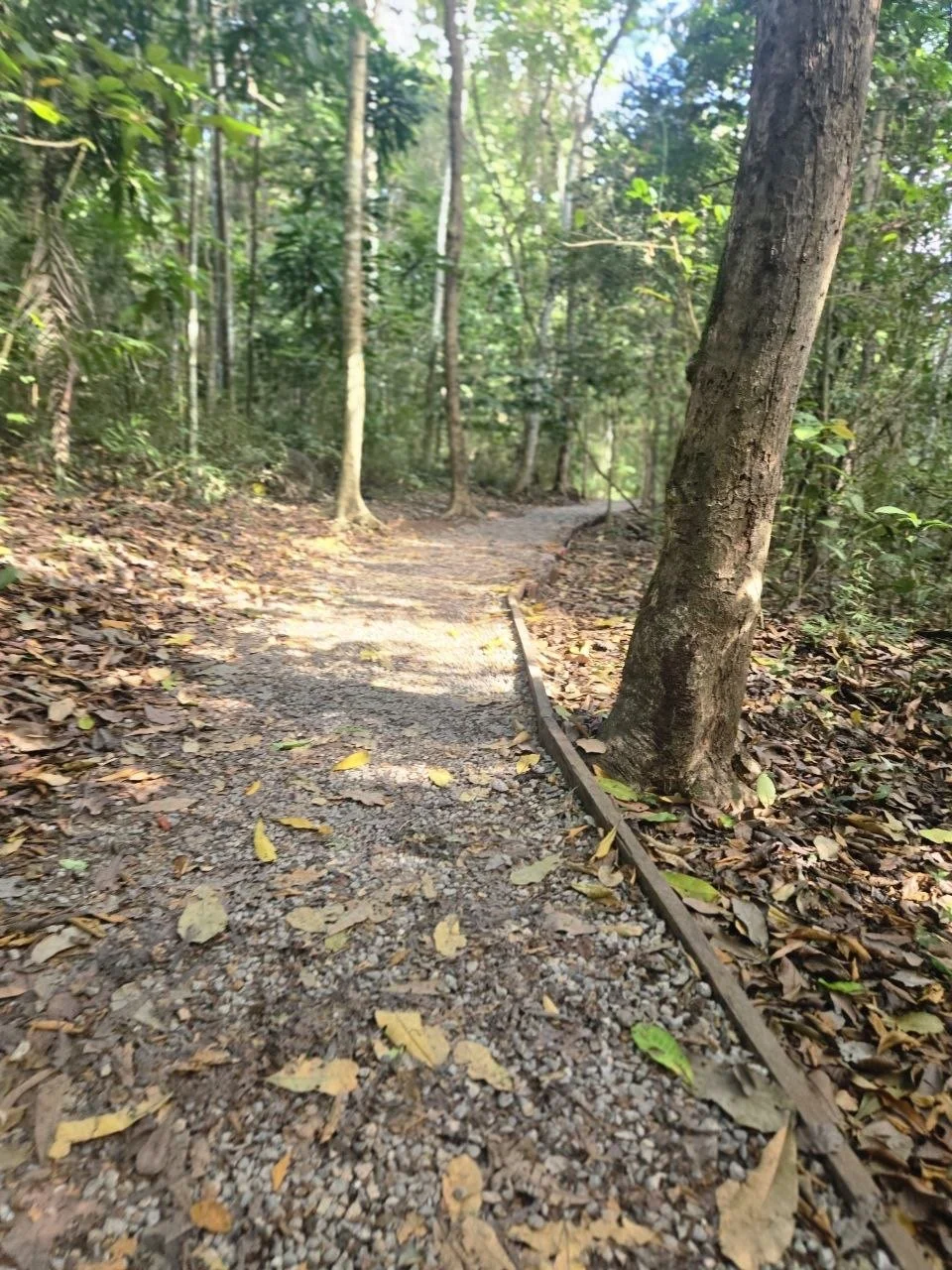
Approaching the trailhead, Panama’s Soberanía National Park loomed ahead like a wall of green. Two-hundred-foot trees formed the roof of the canopy. In successive layers below, others spread their branches. Palms with ten-foot leaves filled any available space. Woody vines wound their way across it all, connecting the landscape and wrapping around trees to reach high into the canopy. Humid and hot, the shade of the jungle was calling.
Immediately, the sounds of the jungle were overwhelming. The noise came from everywhere all at once. There was a hum of cicadas, punctuated by the croak of frogs and cracking sticks falling in the distance. Above it all, a constant cadence of bird chirps, trills, and whistles chimed through the canopy. The serenade continued as the trail began to incline, and my breath joined the chorus.
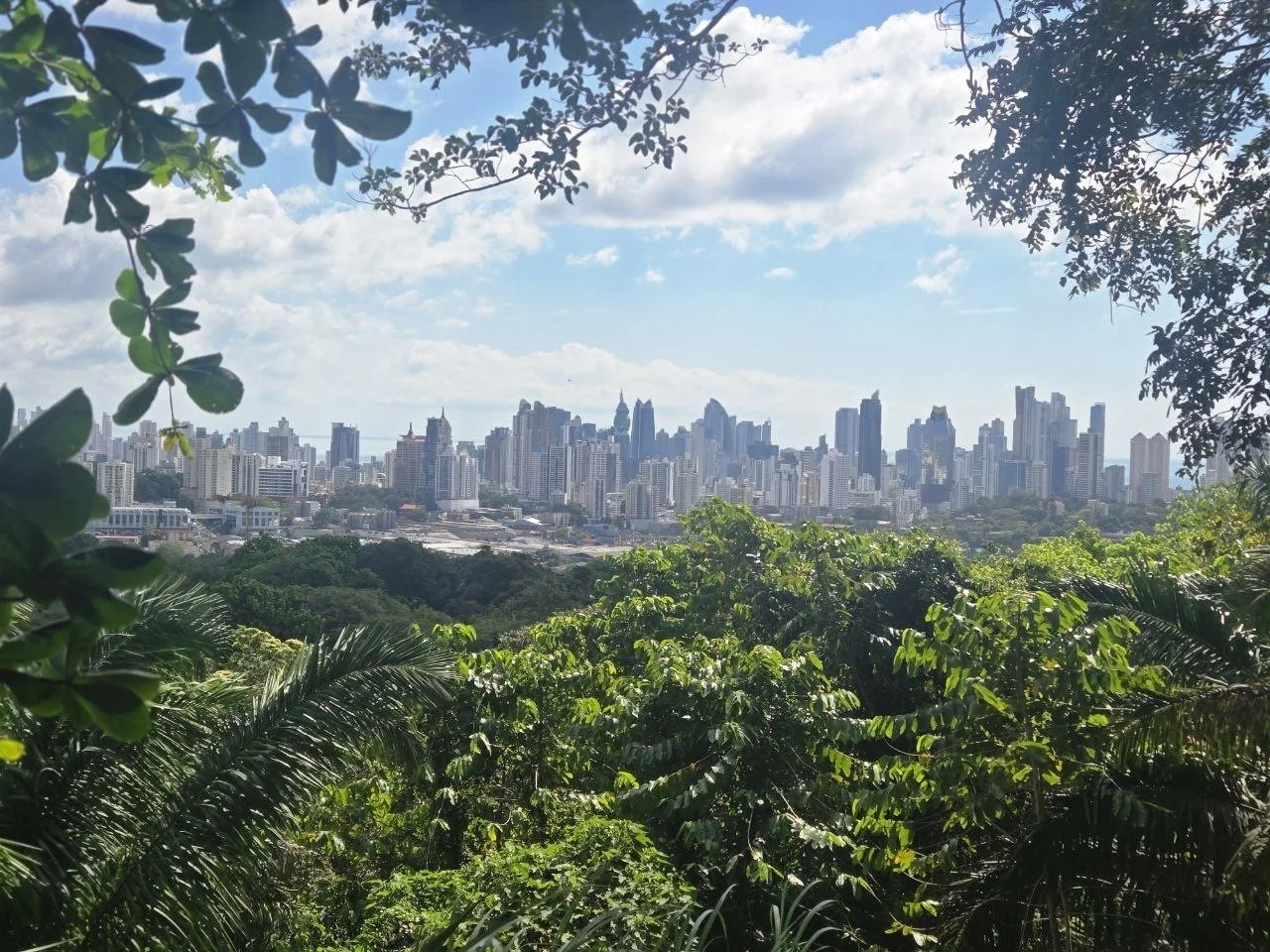
One step after another, wonder became work. Each hiker added to the rhythm of footsteps on the gravel path. On a break after a tough set of stairs, there was a perfect window framed by shrubs, palms, and overhanging vines looking through the jungle and down the hill toward Panama City. In the early morning sun, it was stunning, as if nature was creeping around the skyline. After some cold water, the hike continued.
Every turn revealed something new. Groups of Capuchin and Howler Monkeys, along with two types of sloth, make use of the vine highways above. Squinting into the interlaced branches, there was no sign of the primates or their slower brethren. Every misshapen tree trunk looked like a sloth in hiding. Watching the canopy and your feet on the trail was a challenge. The hike began early, but the forest woke up earlier.
Around one bend, a small stream from the Chagres River was full of Slider turtles basking in the sunlight. They slowly climbed and shuffled on top of one another to get time in the light. Digging through the muddy water with webbed claws, some foraged along the banks, others only noticeable by the ripples in the surface they left behind.
In even greater numbers, leafcutter ants moved along the trail and across their own worn paths in the forest floor. Each carried a piece of leaf overhead, forming long, steady lines that disappeared into the undergrowth. The movement was constant and coordinated, a flow of green fragments cutting through the soil in every direction, making it look like the ground itself was moving.
The ground off the trail was dark and soft, a mix of damp soil, broken sticks, fallen leaves, and exposed roots pushing through the surface. Clumps of decaying matter sat beside finer, loose earth, everything in different stages of breaking down. Scooping up a handful, it sifted easily through your fingers, cool to the touch under the shade of the canopy. Everywhere you looked, the process was ongoing. Leaves fell, branches snapped, roots spread, and everything slowly returned to the ground beneath our feet on which it relied.
After one final push, the path opened into a clearing at the top of the hill. The canopy pulled back just enough to reveal two views. One looked east, back over rolling hills of dense jungle stretching out without end. The other faced Panama City in the distance, the ocean just beyond it. From this height, the skyline felt like the edge of something, set against the vastness of the forest behind us. We stood between the two, the untouched land we had just climbed through and the built world waiting ahead.
The trail we followed was part of the historic Las Cruces Trail, built in the 16th century to move gold from the Pacific side of Panama to the Caribbean for Spain. Long before ships moved through the canal, goods moved along paths like this, carried through dense jungle from one coast to another. The landscape around us had always been part of that movement, resources passing through, taken from one place and delivered to another. Whether leaves carried by ants across the forest floor or gold hauled by conquistadors through the hills, the pattern was the same: Panama has long been a place of transit and momentum. Later, something else would follow those same paths out of the jungle, taking on a legendary name and global reputation: Panama Red.
Panama Canal: The Crossing
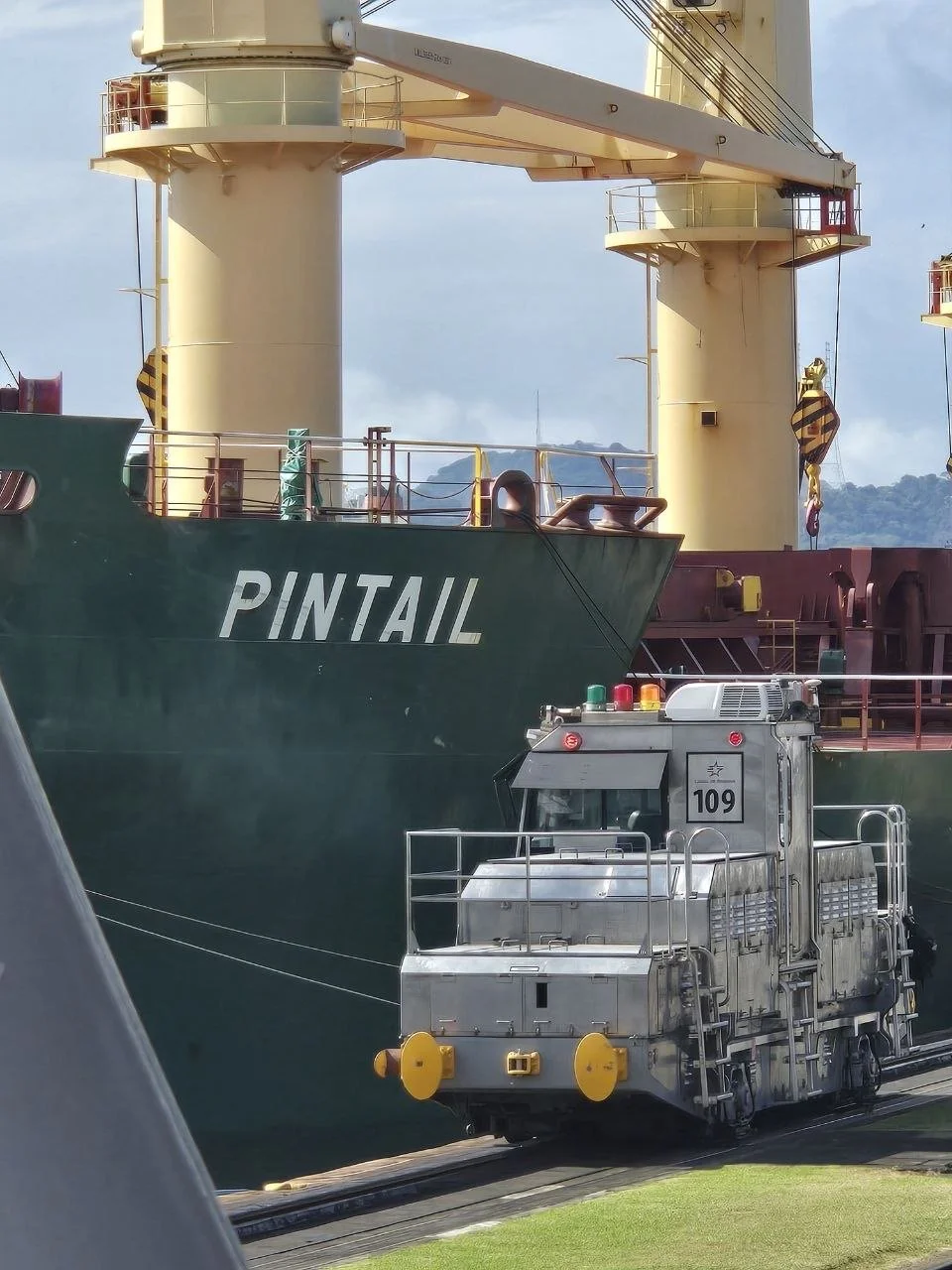
The next day, we stood shoulder to shoulder with tourists on sunbaked aluminum bleachers, watching water pour out of the Panama Canal locks. Millions of gallons drained away to lower a ship from the elevated level of Lake Gatún down toward sea level.
A grain carrier, bound from the east coast of the United States to Japan, sat heavy in the chamber. Its dark green hull and yellow cranes rose above the deck, the name PINTAIL painted in white across the stern. As the water level slowly dropped, the ship settled deeper, waiting for the gates to open. The scale was hard to process. These weren’t just ships, but floating buildings, moving the goods that keep the world running.
Initially begun by the French, the canal project was plagued by disease, brutal working conditions, and the relentless challenges of the jungle. The effort was a massive failure before it was eventually completed in 1913 under new leadership. What remains is a system defined by scale and ambition. The locks themselves are simple in concept, but standing beside them, watching millions of gallons of water rise and fall, it becomes something else entirely, an unmistakable expression of human will imposed on the landscape.
Beyond where we stood was the expanded Neo-Panamax Canal. At first, it went unnoticed until a hush fell over the crowd, and people began pointing toward the horizon. We had been watching a massive ship pass through the locks, but behind it, something even larger emerged. A container vessel rose above the treeline like a moving castle, its stacked cargo forming a wall of steel that dwarfed the landscape around it.
The scale, success, and spectacle of the canal can’t be separated from its cost. Drought, geopolitical pressure, and the demand for freshwater resources place constant strain on Panama. Each ship that passes through sends millions of gallons of fresh water out to sea, water that cannot be recovered.
Watching the lock gates open, there was a quiet unease in realizing this process repeats every day, year after year. The goods are needed, but so is the water. Lake Gatún and Panama’s seasonal rains have sustained the system for generations, but standing there, it was hard not to question how long that balance can hold.
In a place where so much of the world passes through, it’s not surprising that something grown in the jungle here would eventually take on a life far beyond it. Panama has long been a point where things leave one place and reappear somewhere else with new meaning and value. Cannabis was no different. What started on islands and hillsides here would travel outward, carried by the same forces of supply and demand in the cities that move everything else.
Panama City on the Horizon
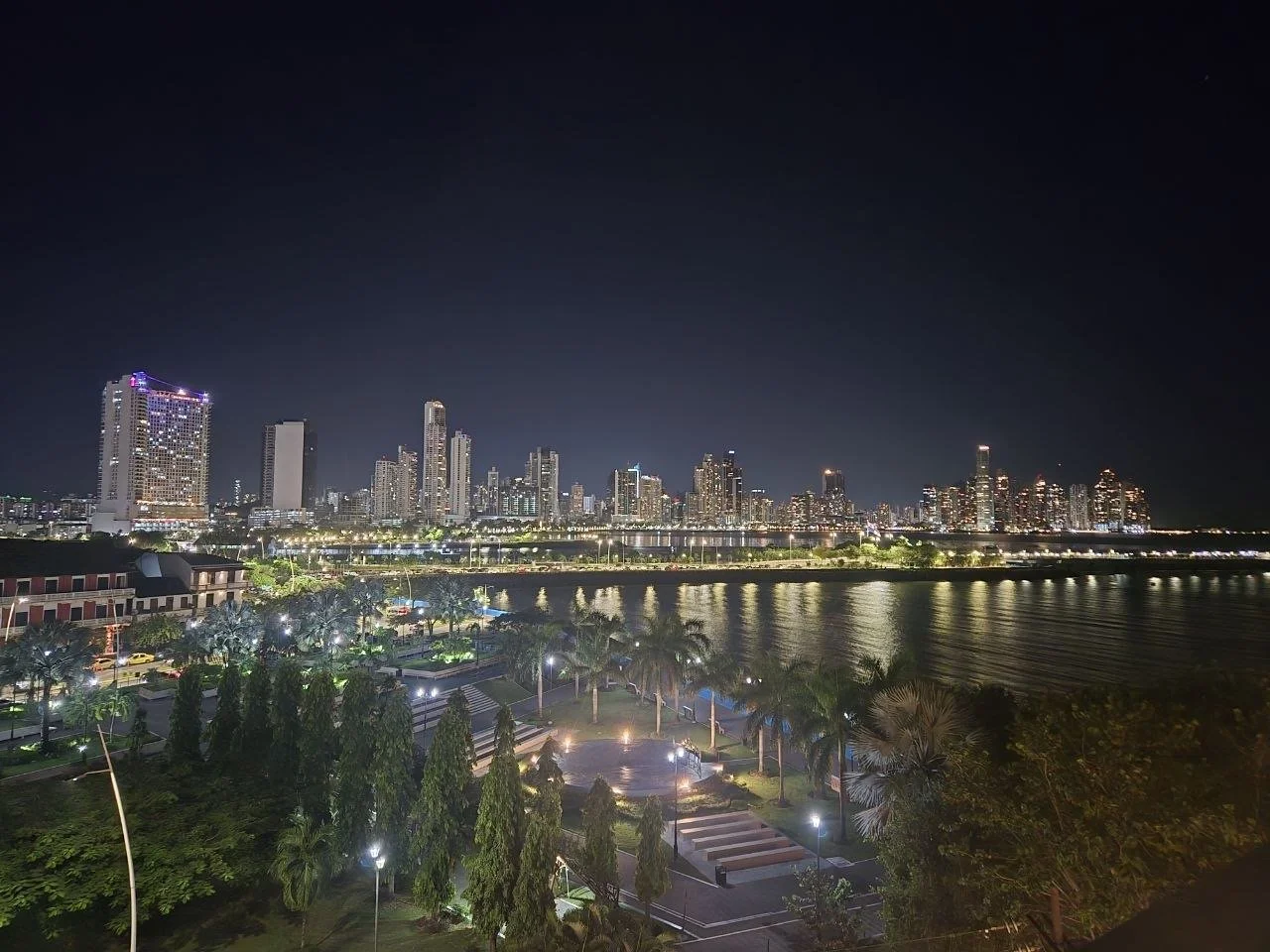
It was night by the time we arrived in Panama City. Across the water, the bright lights of downtown shimmered against the ocean surface. In Casco Viejo, rough brick streets and uneven curbs guided us through narrow blocks lined with Spanish colonial architecture. Churches and buildings dating back to the 16th century stood preserved, restored, and repurposed to support the steady flow of tourism. Arriving late Monday night, many businesses were closed, providing a unique perspective. This was a place shaped by history, where stories of the raids of Captain Morgan still linger in the background.
By morning, the neighborhood transformed. We stuck to the shaded side of the streets as the area came alive under a bright blue sky and rising heat. Shops opened, and the smell of coffee and seafood drifted through the air. Museums, guided tours, and restaurants filled every block.
Old buildings had been reworked into rooftop bars, restaurants, and apartments; new life layered carefully over old foundations. Music spilled into the streets, and hosts stood at nearly every doorway, inviting people inside. It was lively, welcoming, and easy to enjoy, but there was also a sense that everything had been arranged just so. A place preserved, but also presented.
The longer we stayed, the clearer the line between preservation and reality became. Casco Viejo was real, but it wasn’t the whole story. Just beyond its edges, the same style of buildings stood, but without restoration, worn down and left to age. The version of the city presented to visitors gave way to something more uneven, more lived-in, and rough around the edges. Police patrolled the borders, a quiet reminder that stepping too far in the wrong direction could quickly change the experience.
Downtown told a different story entirely. Glass skyscrapers lined the waterfront, reflecting the sun and rising high above the city like something pulled from Miami. Moving between these spaces made the contrasts impossible to ignore. Wealth and hardship, restoration and neglect, all exist side by side. It was striking, and at times difficult to reconcile, knowing how many people lived within those differences.
In a short time, we connected the way most travelers do, through food. Ceviche became a constant, showing up at nearly every stop in different forms, each one fresh, bright, and tied to the coastline. Alongside it were traditional breakfasts, upscale meals, and quick bites, with influences from across Latin America and beyond. The variety reflected Panama’s global connections, while still rooted in its maritime identity.
Patacones, smashed and fried green plantains, became a favorite, paired with a range of local hot sauces, cold beers, and rum. The food was consistent, accessible, and easy to return to again and again.
Just as memorable were the people in the city and our gracious hosts. Everyone we encountered was patient with broken Spanish and curious about why we were there. Conversations came easily, whether through shared meals, drinks, or the help of a translation app. Even with the language barrier, there was a sense of openness that made connection possible, a reminder that understanding doesn’t always require perfect words.
The contrasts throughout the city were unavoidable. Old and new, local and global, curated and lived-in spaces all exist side by side. Panama didn’t feel like one thing, but many at once, layered together in ways that didn’t always resolve cleanly. And it didn’t need to.
How Panama Red Came to Be
We ventured off the coast of Panama in search of the famed strain. The shift from the city to the islands was immediate. We bounced along sandy paths with the ocean stretching out on either side. The air felt different here, lighter and less crowded. The pace slowed, and everything opened up. Beaches ran long and quiet, broken only by rocky cliffs and tidepools. Places like this were where it all happened.
Life on the islands moved differently. There was less urgency, fewer people, and a stronger connection to the land. Before anything else, this was agricultural ground. People grew what they could, sold what they had, and adjusted when things changed. Survival wasn’t abstract; it was practical. What worked stayed, and what didn’t was replaced. Cannabis fit into that rhythm easily.
Fidel Muños, known locally as El Tío, is a 78-year-old man who has spent his life on La Esmeralda. He was short and thin, with white stubble along his jaw and a worn New York Yankees hat tipped back on his head, his hands marked by years of work. When he spoke, it was steady and direct, without exaggeration. He wasn’t telling a story of Panama Red the way it had been passed down. He was describing something he had lived.
By the time he was 10 in 1958, he had already started hearing about cannabis making its way through the islands. At first, there wasn’t much of it. Small amounts moved between places, and the idea spread slowly. Another island, Pedro González, played a role in bringing it into the region. Over time, more people began to experiment with growing. At some point, people realized it could be sold.
Early on, a pound might go for fifteen or twenty dollars. It was enough to matter. As more people began growing, supply increased, and prices dropped. What had started as an opportunity quickly became something more competitive. People grew more to make more, but in doing so, they drove the value down, creating challenges the modern cannabis industry is familiar with.
At first, most of it stayed local, moving into Panama City and nearby areas. Then the demand changed. Boats began arriving. Small boats would pull up along the islands, and the message was always the same: we want as much as you have, and we’ll be back for more next time. Buyers came from outside Panama, and they kept coming back. As long as there was product, there was demand. The focus shifted away from local markets and toward something larger. People grew more, worked more, and tried to keep up. Entire communities adjusted around it, doing whatever they could to meet the expectations of buyers.
Before cannabis, most people were already working the land. They grew produce, raised what they could, and sold it where they were able. In that sense, cannabis wasn’t a radical change. It was another crop, one that happened to be more profitable. For a time, it brought real financial relief to the islands, but it also brought attention.
There were stories, rumors, and a growing sense from the outside that the islands were dangerous, shaped more by propaganda than reality. Fidel described something different. A working community, people focused on providing for themselves and using what they had available.
There were two harvests each year. One came in October during the rainy season, when the quality was lower. The other cycle began around the same time but carried through the dry season, producing a stronger crop. That second harvest was what buyers wanted. The conditions were right, and people learned how to work with them. Merchants paid more for it, and it became the standard everyone aimed for. There wasn’t much structure beyond that.
It wasn’t organized in the way it might be imagined now. There were no centralized operations and no unified system. It was individual, house by house, area by area. People planted what they could. If something didn’t grow well, they tried something else. There was no single method, no shared standard, and no common name for what they were producing, least of all Panama Red
“We didn’t call it anything,” he said. “We just planted it.”
The years between the 1970s and the mid-80s were the peak. Production was steady, demand remained high, and for a time, it worked. But it didn’t stay that way.
By the 1980s, pressure increased. Under Manuel Noriega, there were efforts to control and limit independent production. Helicopters would come in over the islands, visible long before they arrived. People had time to run, disappearing into the jungle where they couldn’t be followed. Crops were burned and fields destroyed, but arrests were rare. The land made it possible to avoid capture, even if it couldn’t protect what had been grown.
Eventually, it became unsustainable. By the late 1980s, the system that had supported the islands began to fall apart, especially as the cocaine trade surged. Looking back, Fidel spoke about it without nostalgia. He described what it had provided, but also what they didn’t understand at the time.
“We didn’t know where it was going,” he said. “We knew it was helping us, but we thought maybe it was something bad for people. There was always that feeling.”
There was no illusion about why it continued: poverty, hunger, and limited options. It worked, and so people did it. Now, his perspective has shifted. With the rise of medical cannabis, he sees it differently. What was once viewed only as harmful is now understood in another way, something that can help people rather than damage them. There’s a sense that things might come full circle. Conversations have already started about returning to the islands, about growing again, this time under different conditions with investment and oversight.
The Panama Red El Tío describes isn’t something named or carefully preserved. It wasn’t a single thing, passed down or maintained with precision. It was shaped by the land, by timing, and by need. Whatever the world came to know as Panama Red, it didn’t begin here as anything clearly defined. It was simply what people had, and what they had was some of the best cannabis of the era.
What Panama Red Became
To understand how something so loosely defined could become one of the most recognizable names in cannabis, I spoke with Dwight Diotte, a genetics and research advisor whose work stretches back nearly four decades into the early foundations of modern cannabis breeding. His experience spans the Canadian and European seed scene of the 1980s with a focus on landraces and heirloom genetics from the 70s through 90s.
By the time he first encountered Panama Red in 1980, it was already circulating as something distinct. He had heard about it before that, but it appeared unpredictably. In southern Ontario, where shipments moved up the East Coast, there would occasionally be Colombian varieties, then back to brick weed. On rarer occasions for a few years, Panama Red would show up.
When it did, it stood out. “It was different right away,” he said. “You’d open it and just go—whoa.” He described it as dark gold with a reddish tint, with larger colas and more structure compared to what was commonly available at the time. The smell carried a deep spiced fruit character layered with something peppery and almost menthol underneath. It hit differently too, clear, visual, sometimes disorienting, with a kind of looping mental movement that could pull you off track if you weren’t paying attention. It sold for around ten dollars higher per ounce than other imports, and people didn’t mind paying the premium price.
Then, it would vanish again. A few years later, he saw it come through British Columbia in larger quantities, a few kilos at a time. Again, it was unmistakable. Not because of a label, but because of how it presented itself, its aroma, its effect, and the way it held together.
What exists today, Dwight explained, traces back to a small number of surviving threads. Some were maintained by breeders on the West Coast of the United States, dedicated groups preserving what they could from earlier imports. Others passed through Europe, including collectors in Spain who held onto what they believed were among the last remaining lines.
What exists now traces back to those lineages or to later attempts to recreate what people remember. If it isn’t, then it has been bred to mimic what people remember. Telling the difference may no longer be possible in some cases. Over time, even those preserved versions have drifted from the original.
Tropical sativas like Panama Red were shaped by specific environments: heat, humidity, steady trade winds, and long growing seasons that allowed plants to flower over 13 to 15 weeks. In those conditions, the plants developed complexity slowly, building layered terpene profiles and effects that didn’t flatten into a single note. Grown in those climates, Dwight noted, the plants could deepen post-harvest for months, becoming more expressive rather than fading.
Grown elsewhere, especially indoors, that complexity shifts. “The plant isn’t exactly what it was,” he said. “But the essence is still there.”
He described those older sativas as fundamentally different from modern hybrids. Unlike shorter-cycle plants bred for consistency and yield, these varieties didn’t behave in a simple way. They unfolded over time, and the complexity of their profiles means your tolerance doesn’t build up as fast. As one terpene may dissipate, others are there to take their place throughout the flower’s lifespan.
You can compare tropical sativas to single-origin light roast coffee. You’re tasting the terroir, the environment, and the place in the product. That connection to place is what complicates the idea of Panama Red as a fixed cultivar.
In cannabis, those lines aren’t always clear. A landrace isn’t a single plant; it’s a population shaped over time by environment and selection. Dwight described it simply: if a plant grows in the wild, adapts to its surroundings, and continues across generations, it becomes a landrace. When people begin selecting from within that population, choosing what grows best and what sells best, that's where heirloom lines begin to form. Heirloom lines are some of the best and most sought-after varieties in the world, and that is what Panama Red became.
The origins of Panama Red are just as layered. Dwight pointed to several possible threads, none definitive, all plausible. One traces back to Red Angolan cannabis brought through African trade routes into Brazil, where it spread north through Colombia and into Panama. Another suggests influence from Southeast Asian varieties, possibly carried back by soldiers in the late 1960s and introduced into Caribbean and northern South American growing regions. There are also indications of Indian hemp moving through earlier Spanish colonial routes, with Panama’s plants showing structural similarities. Still another possible influence could have been Chinese immigration, which occurred with the canal projects in the early 20th century.
None of these paths exists in isolation. Like the plant itself, the history isn’t singular. It’s a convergence, seeds moving with people, adapting to new environments, and slowly becoming something specific to the place where they put down roots.
The clearer it became, the harder it was to define. What started as something grown across islands and hillsides shaped by climate, timing, and necessity was carried outward, selected, preserved in fragments, and eventually reassembled into something people could name.
What exists now isn’t exactly what left Panama decades ago, but it isn’t entirely separate either. It’s what remained, what was remembered, and what people tried to hold onto after it was gone.
Origins vs Ownership
What Fidel described about his time cultivating cannabis on the islands of Panama was straightforward. It was work. It was a crop that grew well in the conditions they had, one that could be sold when other options were limited. It fit into an existing rhythm of agriculture, something added to what people were already doing to support themselves.
There wasn’t a sense that they were creating something distinct or preserving something specific. There was no name attached to it, no effort to define it beyond whether it grew and whether it sold. It wasn’t cultivated with the kind of intention that would come later, and it wasn’t treated as something rare or specialized. It was practical.
In many ways, what would later be called Panama Red was survival agriculture more than anything resembling a carefully developed cultivar. The people growing it weren’t branding cannabis or shaping a product for a global market. They were feeding families, working within poverty, and navigating the risks of prohibition as best they could. It was something that worked, and so it continued. The name Panama Red came later. The origin story deserves to be remembered along with the brand and legend.
Somewhere along the path from the islands to the cities it passed through and eventually into the hands of consumers further north, it became something else. A name was applied, a reputation formed, and over time, a story took shape around it. What had been variable and loosely defined became something people spoke about as if it were consistent and known.
That shift says as much about the places it arrived as the place it came from. The legend of Panama Red may tell us as much about American nostalgia as it does about Panamanian agriculture and people. It reflects a desire to locate something original, something tied to a specific place. It also shows how societies place a lens over the world and go out assuming what they find will meet their expectations. What left Panama wasn’t a single thing, but what returned, in memory and in name, was.
Panama’s Memories and Monuments
One of the most important figures in Panama’s history, Rufina Alfaro, is remembered as a central figure in the events leading to independence from Spain. On November 10, 1821, in the town of La Villa de Los Santos, she is said to have helped spark an uprising that would contribute to Panama’s break from colonial rule.
Her story begins simply. She was from a nearby village, raised in a rural community where her family farmed and sold what they could. She worked bringing eggs and vegetables into town, moving between spaces in a way that made her familiar to both locals and Spanish officials. She could read and write, something uncommon for the time, and through a mix of presence and trust, she gained access to places others could not.
According to the story, she used that access carefully, gathering information while appearing to move through her daily routine. When she learned that weapons were being cleaned and prepared for use against the people, she passed that information to local organizers. Instead of continuing her work as usual, she joined them.
What followed has been told for generations. A crowd gathered, armed mostly with sticks and stones, and they moved toward the fortress. Rufina is said to have led them, calling out “Viva la Libertad!” as they advanced. By the next morning, control had shifted. The uprising in Los Santos became one of the first decisive steps toward independence.
Though for all its importance, the story remains uncertain. There are limited records confirming the details of Rufina Alfaro’s life. Some historians question whether she existed as she is described or whether her story has been shaped and expanded over time. The debate has reached as far as Panama’s national assembly, where her place in history has been formally discussed.
But in Panama, her presence isn’t defined by documentation. She is remembered. Celebrated. Her name is attached to places, to monuments, to national identity. November 10 remains a public holiday. Her story is taught, repeated, and carried forward. In that way, her significance isn’t diminished by uncertainty. It’s reinforced by it.
Panama Red exists in a similar space. Not as something fabricated, but as something shaped over time, carried, retold, and redefined as it moved.
After Panama Red Left
The outline of Panama Red is still there, even if the edges aren’t. It’s described in familiar ways, earthy and spiced, sometimes sweet with a tropical lift underneath. The effects remain part of its identity. Fast, cerebral, energetic, occasionally disorienting. Something that sharpens rather than softens. Those qualities have held. Most everything else has shifted.
Panama Red was never a single cultivar moving cleanly through time, but a range of plants shaped by place, season, and the people growing them. Over time, that variability narrowed. Seeds were selected. Some lines were preserved, but many disappeared.
Today, Panama Red sits somewhere between plant and memory. It can still be grown and experienced in ways that echo its past, but it has been shaped by geography, cultivation, and time.
Looking back, the place itself was never in question. The land, the climate, and the people who grew it were real and immediate. That part held. What followed became harder to pin down. What changed wasn’t just the plant. It was how people chose to describe it. A place became a product. A memory became a standard. A story was repeated until it felt complete, even when parts of it were never fully known.
Panama Red lives in that space. Not as a myth and not as something fixed, but as something carried outward and understood differently depending on where it landed. The question isn’t just what Panama Red was. It’s how it came to be understood.
How often do we do the same with other things, shaping them into something clearer, simpler, and easier to hold onto than they ever were to begin with? Panama Red is a legend worth exploring, not because it has a single answer, but because it doesn’t.