
Originally featured in Fat Nugs Magazine Vol. 29: Cancer Edition. Enjoy the great articles and community at fatnugsmag.com.
In 1993, there was a young Siberian woman found preserved in Altai permafrost. She had been there for roughly 2,500 years. Among the items buried alongside her was a leather pouch of cannabis. Modern imaging wasn’t run on it until 2010 which revealed what had likely defined the final years of her life, a breast tumor with evidence of spread to her lymph nodes. The cannabis buried with her was almost certainly there for a reason: the pain, the nausea and the things the disease was doing to her body. Whatever understanding she or the people around her carried about the plant, that knowledge unfortunately wasn’t passed on to future generations.
Researchers at the National Cancer Institute published a paper in 1975 showing THC inhibited the growth of lung adenocarcinoma cells in a dish and in living mice. However, the research wasn't funded or built upon. Spain and Italy picked it up in the 1980s and spent the next four decades doing the work. Meanwhile cannabis stayed Schedule I in the US, with no accepted medical use, grouped with heroin and above cocaine, and the research that should have happened sat behind a legal wall.
What everyone could see without the research was that it worked for nausea. Dr. Donald Abrams, an oncologist who has practiced in San Francisco since the early 1980s, wrote in a 2016 clinical review that he needed a controlled trial to prove cannabis worked as an antiemetic (nausea aid) "about as much as I need a placebo-controlled trial to demonstrate that penicillin is an antibiotic." A 42-year-old with metastatic colon cancer wrote to him: "it did what no other drug could do, completely solve the severe nausea I had. It allowed me to play with my children, attend their sports and school functions and just function very normally in day to day activities." That letter is in the peer-reviewed literature, but the federal government wasn't reading it.
The FDA approved Marinol in 1985, synthetic delta-9-THC in a capsule, for chemo nausea, which meant the government acknowledged the mechanism worked while keeping the plant illegal. The problem with that arrangement, beyond the obvious, is that Marinol isn't cannabis. It's one compound. Cannabis contains somewhere between 400 and 500 chemical constituents, and a 2020 review in Cancers documented that terpenes and flavonoids independently demonstrate cytotoxic activity against cancer cells. Myrcene, Limonene and Beta-caryophyllene aren't just responsible for how weed smells; they're pharmacologically active. The pill doesn't have them. Patients who used both noticed this before the researchers did.
There's also the whole endocannabinoid system, which nobody knew existed until 1988. CB1 receptors are throughout the brain and nervous system. CB2 receptors are dense in immune tissue, including the thymus gland, which trains T-cells and is loaded with those receptors. A 2024 paper in Toxicological Sciences specifically examined how cannabinoids interact with thymic tissue. Worth noting for reasons that are about to become clear.
My friend and former co-worker, Melanie King, spent five years being told the thing in her chest wasn't there. She grew up in Massachusetts, moved to San Francisco in the late 90s and was employee number five at the Internet Archive when the tech world still thought it had good intentions. She found cannabis the summer after high school, watching Fantasia on a friend's back deck with the pool lights reflecting into the trees until they started to look like a zoetrope. "I felt like I let my hair down in my brain," she said. She built an events career through CannaCraft, managed the first onsite cannabis sales at Outside Lands with 300,000 people in Golden Gate Park and pulled off the first cannabis event at Fenway Park. The Boston cop at the end of that night told her, “If the Grateful Dead didn't burn this place down, you guys weren't going to.”
She was working the Cookies booth at Outside Lands when she first noticed the pain in her throat. Something wasn't right when she swallowed. She went to the ER during the festival and a scope found nothing. Over the next five years, she saw specialists and ENT doctors, collected a heartburn diagnosis and eventually something called Globus syndrome, a clinical designation for the sensation of a lump in your throat attributed to stress rather than anything physical. She was accurately describing what it feels like when a tumor presses on your esophagus and trachea from the outside. Nobody found the tumor.
It was Labor Day weekend when she finally drove herself to the ER, alone, because the pain had gotten bad enough that she couldn't justify staying home. They did a chest X-ray. The doctor came in and delivered the news with the measured calm that means it isn't good: you have a substantial tumor in your chest. She was admitted immediately.
The diagnosis was thymoma, cancer of the thymus gland, the structure tucked behind your sternum that trains immune cells during childhood and becomes largely unused in adulthood. Fewer than 400 Americans are diagnosed with it each year and most oncologists encounter only a handful of cases in an entire career. The thymus is also the gland dense with CB2 receptors that researchers are now specifically studying in relation to cannabinoids, the one Melanie's cancer had been quietly growing in for five years while doctors told her she was imagining things.
KU Med in Kansas City said the tumor was inoperable. Too large, too involved with her heart and lungs. "It's curtains for you kind of thing," she said, which of course, was shattering.
A friend mentioned his father was a Mayo Clinic physician. Melanie wrote them a letter explaining her situation and asked if they'd take her case. They said yes. Mayo was a different experience entirely, an interdisciplinary team of specialists reading the same case and deciding by consensus rather than the succession of individual appointments that had missed her diagnosis for five years. Thoracic surgeon, cardiologists, oncologists, radiation specialists all working toward the same conclusion. "They knew," she said. "This is what the medical system was supposed to do." The plan was chemotherapy to shrink the tumor first, followed by surgery.
She had RSO during chemo, Rick Simpson Oil, a full-spectrum high-potency cannabis concentrate. A friend had made suppositories out of it by dissolving RSO into coconut oil and letting it solidify, because a rectal delivery route means nausea can't interfere with dosing and absorption stays consistent even when nothing oral is viable. Melanie gets nauseous easily in normal circumstances, and cisplatin, which was part of her chemotherapy regimen, is one of the most emetogenic drugs in use, hitting both the brain and the gut lining simultaneously. Standard antiemetics help most people most of the time, but not all people all of the time. The RSO got through where the standard options were falling short. The tumor shrank more than the doctors had anticipated. "It's clear," she said, "that the RSO significantly impacted that tumor shrinkage."
What came next was a sternotomy, with her chest opened through the sternum and ribs broken apart to give the surgical team access to a tumor that had grown into both her heart and lungs, both of which had to be stopped during the procedure. The best thoracic surgeon in the world handled it, she said. She kept her kids at home for all of it and didn't let them see what the hospital stay looked like and involved during that stretch. A hard decision made for her loved ones.
The surgery didn't close without complications. She had to be put under again to address them and again had to be resuscitated. Then came the Dilaudid for the pain, and Melanie, who as we mentioned has difficulty with nausea, immediately began vomiting, which is not a gentle experience when your chest has just been cracked open.
The ICU doctor, German with small round glasses and a bow tie, leaned toward her at some point during the worst of it and asked, “What did you do during chemo that made you better?” She pointed to her backpack. The nurse reached in and pulled out the RSO she had brought from California, sealed in its original packaging with lab reports included.
Minnesota had medical cannabis but Melanie was an out-of-state patient and couldn't obtain a license. Cannabis transported across state lines remained federally illegal regardless of what either state had decided about the matter. The doctor walked it all the way up to Mayo's top administration. They said no.
"I will never forget being in my bed," she said, "and hearing him banging his fist on the desk, yelling: I have a patient who is suffering, and I have a way to heal her in my hand, and you won't let me use it. This is an atrocity."
Mayo offered Marinol instead. It had to be sourced from outside the hospital and took time to arrive. When it did, it wasn't the same.
"It's almost like if you're expecting sugar and someone gives you old-school NutraSweet," she said. "There is an effect but it's a shadow of it. Marinol comes in with this weird, chemical, squeaky quality. It doesn't have that beautiful earthy thing. With cannabis you can feel Mother Nature wrapping her arms around you especially when you're sick. But this, this was trying to be an opioid and even failing miserably at that."
Melanie spent three weeks in the ICU before recovery could really begin. Then the panic attacks developed, something that happens, she later learned, to many people whose hearts have been stopped and restarted during surgery. When she got home and could take RSO again, her nervous system could finally settle back down to something recognizable. All of her current doctors know about her medicine now because she educated them herself. She explains that her case is part of a larger movement pushing for change at Mayo and other hospitals regarding cannabis as medicine.
She mentioned that in San Francisco in the 1990s she used to drive around delivering cannabis to AIDS patients who were too sick to leave their homes. "Little did I know," she said, "so many years later, that I was one of those people that needed medicine."
At some point I just had to say it, I asked “How are you so tough?” She didn't even pause. Shrugged in a motherly way and turned it back on me, saying I was just as tough. I'd just spent thirty minutes listening to her describe having her chest cracked open alone, being brought back twice, fighting for a medicine she knew worked while a doctor banged his fist on a desk outside her door with her two kids out of state. I was sitting there genuinely in awe of this woman and her story, and somehow she was the one making me feel better about myself. That's Melanie.
In 1975, the NCI researchers found something real, and the government didn't act on it. In 2010, we learned that the Siberian people 2,500 years ago already suspected a connection. A doctor in a bow tie found it again in a hospital room in Minnesota only a few years ago and couldn't use it. With the schedule change, the research will run and we can only hope change will follow. Some things just take a long time to catch up to what people already know.
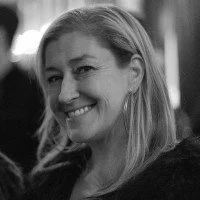
“Lets hope that this will help anyone who needs the encouragement to speak their truth about plant medicine or needs to feel that they aren’t alone.” - Melanie King